#make them pay
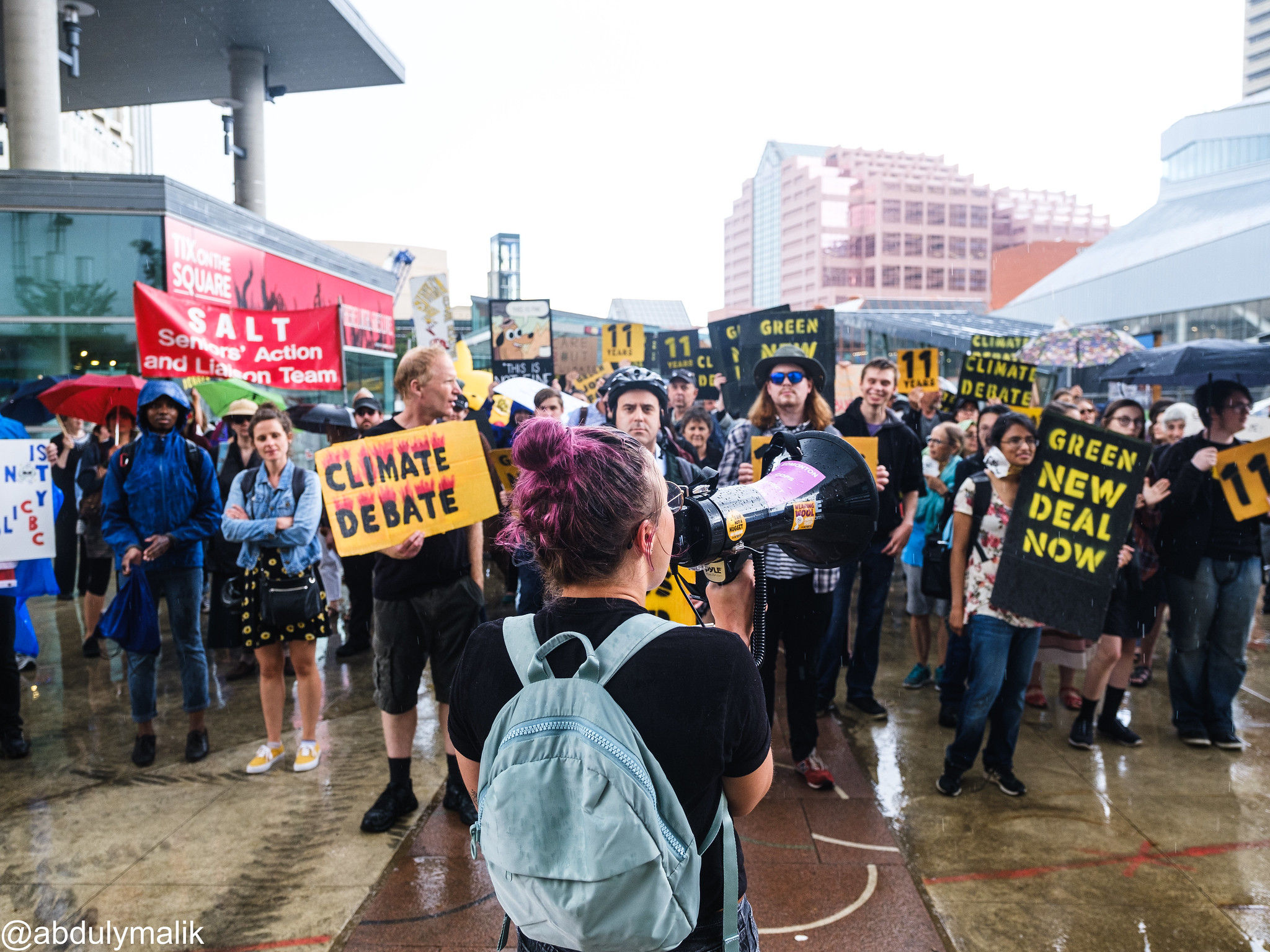
Make Them Pay is a campaign to win back what we’re owed by a handful of disgustingly-rich CEOs — and to use that wealth to invest in the solutions our communities need.
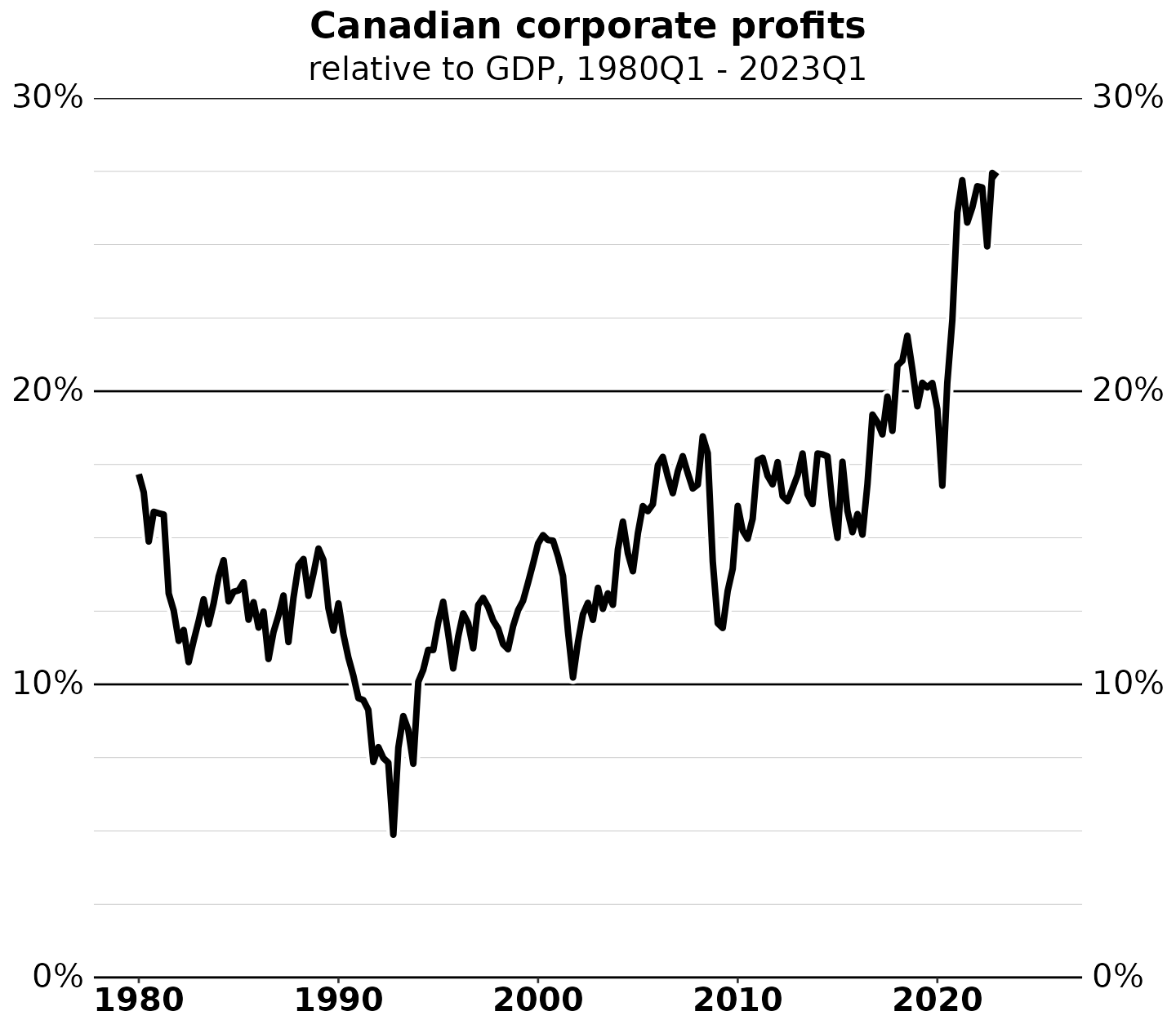
While everyday people struggle to get by amidst rising inflation and the vicious impacts of the climate crisis, corporate CEOs are raking in record profits. They price gouge us at the check-out lines. They purchase fleets of self-driving heavy haulers in the tar sands and automate jobs out of existence.
They buy up entire neighbourhoods, pushing us out of our homes and communities. They evict Indigenous peoples from their homes at gunpoint to build pipelines. They stash millions in offshore tax havens, instead of paying what they owe us.

Police raids of Wet’suwet’en land defender camps in February 2020. (Photo: Amber Bracken / The Narwhal).
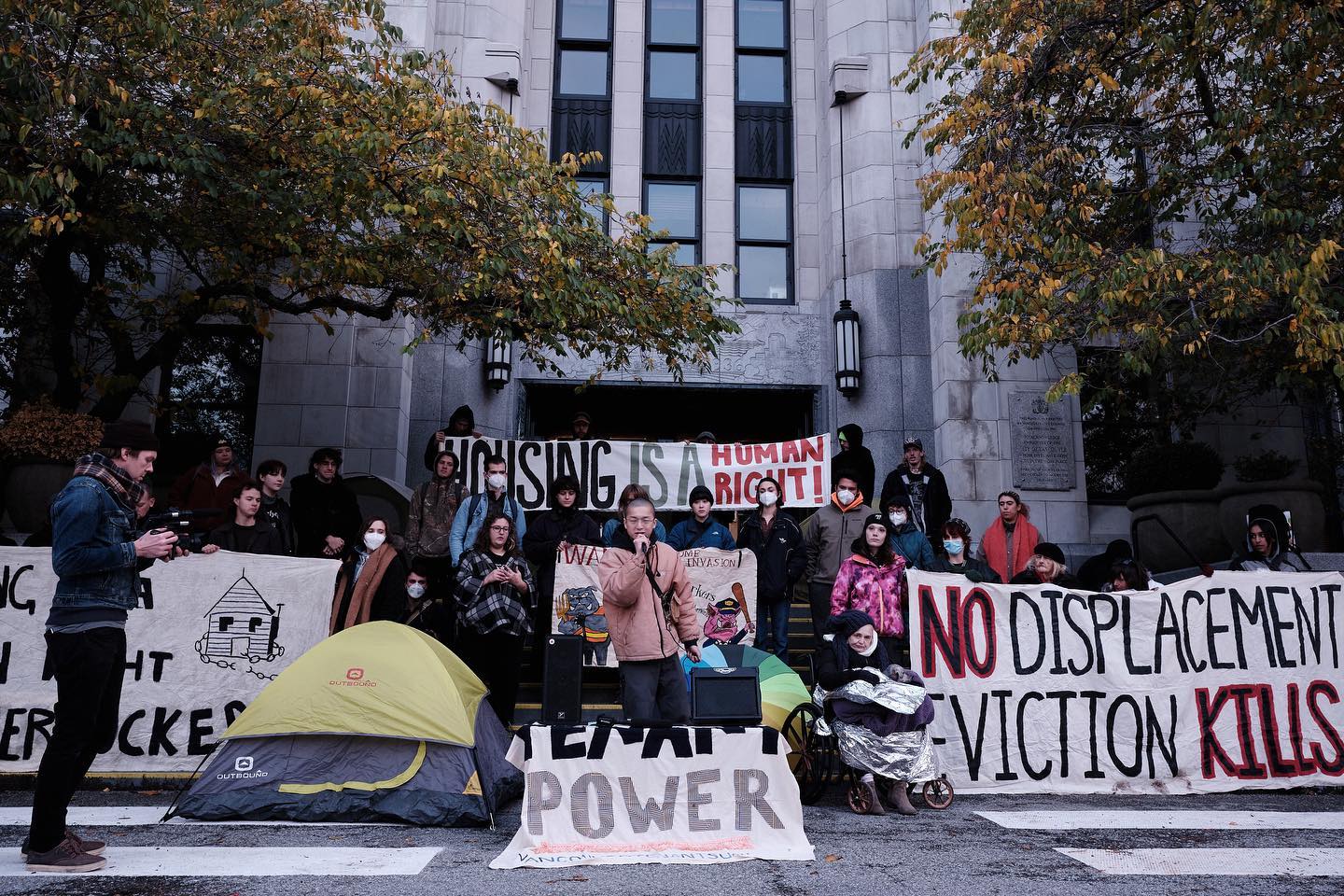
Vancouver Tenants Union members rally with people living in a tent encampment on Hastings Street in a photo shared on Nov. 19, 2022. Credit: Vancouver Tenants Union/Facebook
From groceries to gas lines, the billionaires are reaping the rewards— while we’re stuck bearing the costs.

But it doesn’t have to be this way.
If we just made the top CEOs in Canada pay their fair share, we could invest billions back into our communities. We could pay people what they deserve. We could repair our schools, retrofit our buildings, and expand public transportation. We could prepare to face the climate crisis— and ensure that no one gets left behind when disaster strikes.
All this is within our grasp – and it starts with an Excess Profits Tax on the very wealthiest corporations in Canada.
Will you help us #MakeThemPay?
FAQ
-
What is an Excess Profits Tax?
An Excess Profits Tax, or Windfall Profits Tax, is a mechanism that the Canadian government can use to collect a portion of the massive profits being reaped by corporations and use the money to fund critical programs and services, and distribute it to working people to ease the burden of rising food and energy costs. Under an excess profits tax, companies making extraordinary profits during a war or crisis pay a steep corporate income tax rate—in some cases historically up to 100 per cent—on profits above a set “normal” rate of return. This normal rate of return has been calculated in different ways across jurisdictions and time, but a typical approach would use an average profit rate from recent years.
-
What businesses would it apply to?
We’re calling for an Excess Profits Tax to be imposed on some of Canada’s wealthiest corporations, including oil and gas companies and Big Grocers. Before the pandemic, oil and gas companies had an average combined profit margin of 11%. By 2022, their profit margin had reached 21%. A lot of these profits aren’t being invested back into research and technology or job creation— instead, massive portions of this money are paying off shareholders instead of creating more jobs for Canadians. Big Grocers, like Loblaw, Sobeys and Metro, have also been raking in record profits by price-gouging us at the checkout line. The federal government should be recouping the excess profits they’re making off our backs and use the funds to ease the pressure we’re feeling.
-
This sounds impossible / They’ll never do it!
We get that, but recent coverage of the federal budget found that the federal government was actually considering imposing an Excess Profits Tax on oil and gas companies, but corporate lobbyists convinced them to back down so they could continue to line the pockets of their wealthy shareholders. Polling has also found that a majority of Canadians (62%) across the country support this tax, with only 21% disagreeing. Around the world, many other countries have also imposed Excess Profits Taxes on large corporations in order to ease the cost-of-living crisis and make life more affordable for people. Even in the UK, the Conservative government imposed a 35% tax on oil and gas companies’ profits in 2022 to raise funds for people facing soaring energy bills. The tax will remain in place until at least 2029. Corporate lobbyists may be powerful, but if we get organized we can force the wealthiest corporations across the country to finally pay their fair share.
-
How much money could we generate from an Excess Profits Tax?
We stand to see substantial reinvestments in our communities if we tax the record profits of corporations. For example, the Canadian Centre for Policy Alternatives found that boosting the federal rate to 20 per cent, from its present rate of 15 per cent, which is still low by historical standards, would generate more than $11 billion annually.
-
What would an Excess Profits Tax pay for?
An Excess Profits Tax could help pay for the critical programs and services that our communities desperately need to tackle both the climate and cost-of-living crisis. Money generated from an Excess Profits Tax could help pay for affordable housing, public transit, childcare, and green energy retrofits. Canada is currently spending $88 billion over 10 years to transition to a lower-carbon economy but this number needs to be much higher if we’re to adequately tackle the climate crisis. It’s only fair that the same companies that have been fuelling the climate crisis while making life more unaffordable for everyday people should be forced to pay their fair share in the transition to a green energy economy.
REady to help us win?
Solidarity Statement
We work in solidarity with Indigenous peoples to protect the land, water, and air for present and future generations. We acknowledge and respect Indigenous science, knowledge systems, and ways of relating. We recognize that Indigenous laws and jurisdiction are alive on the lands we live on. We do our best to learn about the agreements and laws that govern the land, and uphold our obligations to them.